Open-sourced for 2 weeks, 50k Stars! An AI expert open-sourced a tool for conducting his own experiments.
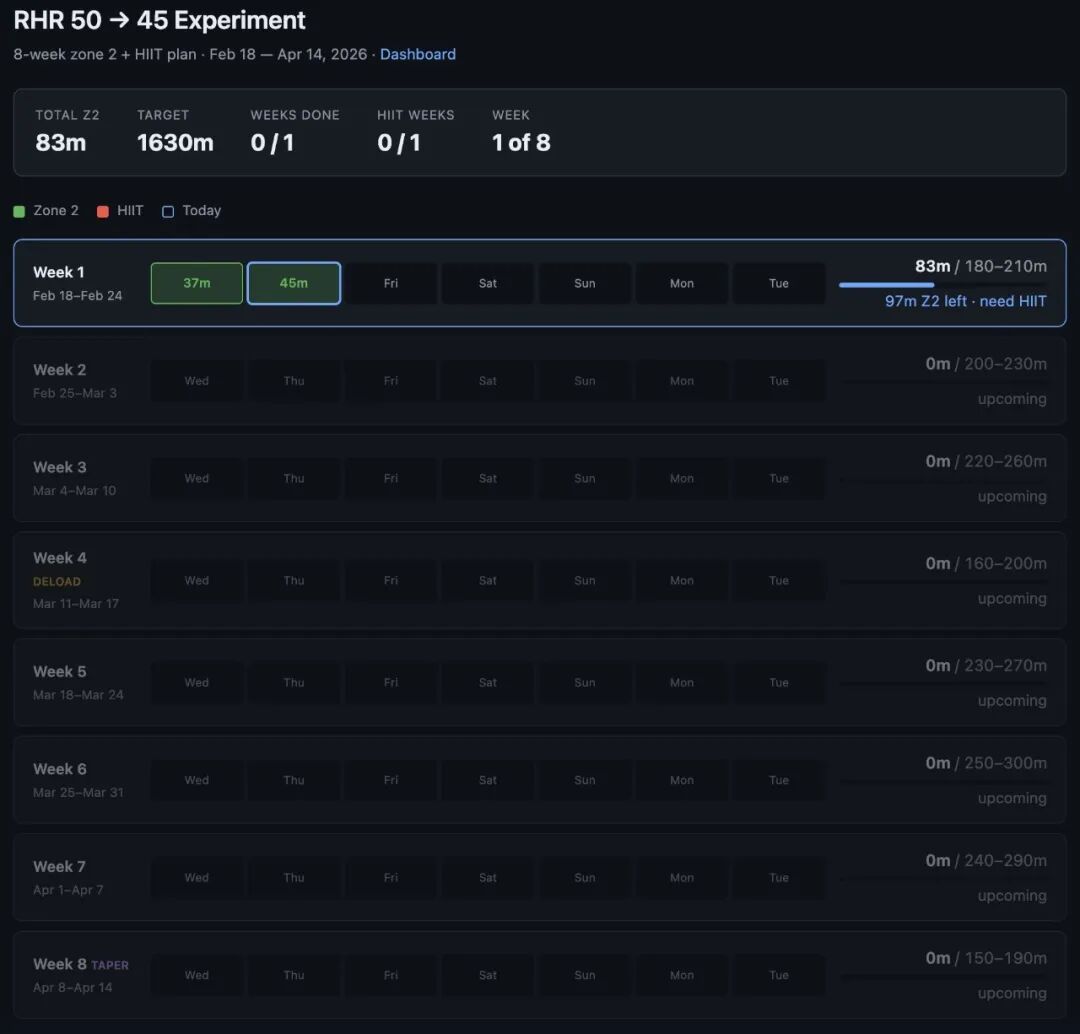
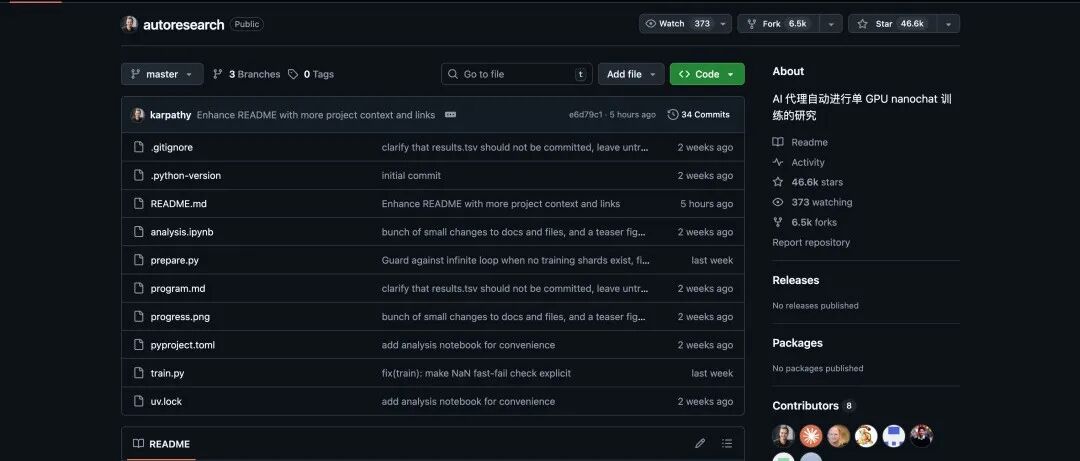
A few months ago, Karpathy posted a tweet.He talked about spending 1 hour vibe coding a heart rate experiment tracking dashboard—a super-customized thing just to track his progress in lowering his resting heart rate from 50 to 45 over 8 weeks.Then he said something particularly interesting:You shouldn’t need a dedicated app for this kind of thing. This is about 300 lines of code, an LLM can generate it for you in seconds. The concept of going to the App Store to find a ‘good enough’ app when you need some functionality feels outdated. An LLM Agent can improvise and generate an app that perfectly fits your needs.What he meant is that the app store model will become obsolete.Future software should be highly customized: you need something, AI generates it for you, use it and discard it.Thinking further along this line: if ordinary software can be like this, what about more complex things?Like… scientific research?Karpathy open-sourced a project called autoresearch, pushing this idea a big step forward.01What is autoresearchTo put it simply: The newly open-sourced auto research lets AI Agents conduct AI research by themselves.Specifically, you give it a real LLM training environment, and then you can go to sleep.The AI will modify the code, train for 5 minutes, see if the results improve, decide to keep or discard, and then repeat.When you wake up the next morning, you’ll see a bunch of experiment logs, and if you’re lucky, you’ll get a better model.Karpathy wrote a particularly vivid passage in the project README:Once upon a time, cutting-edge AI research was done by meat computers—they needed to eat, sleep, entertain themselves occasionally, and synchronize information through the ritual of ‘group meetings’. That era is long gone. Research is now entirely the domain of autonomous AI agent swarms, running on computational cluster megastructures in the cloud.This passage reads a bit like science fiction, but think about it, autoresearch is the embryo of that future.Open-source address: github.com/karpathy/autoresearch02How is this project designedKarpathy’s approach is this: divide the entire project into two parts: one is the fixed infrastructure, and the other is the experimental code that the AI can modify.<img src="https://wechatrss.waytomaster.com/api/image?url=https%3A%2F%2Fmmbiz.qpic.cn%2Fmmbiz_png%2FM2ibDBMdECU3ichibksBH21ZY7IxBw0Ib3sWqeagb2k14h0omUx4NEIgR2YZ6hqTgPtJqT1uO0xzGCOX69fia0LmxFIB37kkHoiaWY13Z4xaVbcs%2F640%3Fwx_fmt%3Dpng%26amp%3Bfrom%3Dappmsg" data-src="https://wechatrss.waytomaster.com/api/image?url=https%3A%2F%2Fmmbiz.qpic.cn%2Fmmbiz_png%2FM2ibDBMdECU3ichibksBH21ZY7IxBw0Ib3sWqeagb2k14h0omUx4NEIgR2YZ6hqTgPtJqT1uO0xzGCOX69fia0LmxFIB37kkHoiaWY13Z4xaVbcs%2F640%3Fwx_fmt%3Dpng%26amp%3Bfrom%3Dappmsg" class="rich_pages wxw-img" data-ratio="0.3527777777777778" data-s="300,640" data-type="png" data-w="1080" type="block" data-img